Showing posts with label Mongolia Religion. Show all posts

More Than 1,000 Young People Gather for Evangelistic Meetings in Mongolia

The event was the largest Seventh-day Adventist gathering in that country, organizers said.

Earlier in 2019, Public Campus Ministries (PCM) leaders in Mongolia planned for what seemed impossible — an evangelistic series that 1,000 young people would attend. Although it was hard to believe that it could happen, PCM leaders prayed with hope and love that God would fill the place with 1,000 young people. They also prayed for the Holy Spirit to lead and guide them throughout the week.
The praise team had one last practice before the program was scheduled to begin. Requests for prayers were sent out via Facebook “to make the impossible possible and for miracles for what they had prayerfully been planning for.” The evangelistic program was entitled the 1K Youth & PCM Evangelistic Series, under the theme “Come, Follow Me! — iFollow.” 
Group photo of volunteers and leaders who put together the recent “Come, Follow Me — iFollow” evangelistic series in Ulaanbaatar, Mongolia. [Photo: Northern Asia-Pacific Division]

On April 30, 2019, the first night of the event, organizers said there was visible evidence that God was answering prayers. The venue began to fill up. A Facebook message declared, “To God be the glory! Continue to pray for us!” 
On the fourth night, organizers said, a miracle happened in the capital city of Ulaanbaatar. More than 1,000 young people attended the event, with 90 percent of them belonging to other faiths. More than 250 young people walked on stage, declaring their decision to follow Jesus and to live a life of mission and service. On May 4, the first group of 60 young people descended to the baptismal waters to start a new life with Jesus.
God’s provision surpassed all expectations, and He taught that with Him, nothing is impossible, organizers said.
According to Munkh-Orgil Lkhagvaa, youth ministries director of the Mongolia Mission (MM), the program was the largest gathering ever in Mongolian Adventist history. He also expressed his belief that this amazing work for God will continue to happen in Mongolia.
Adventism in Mongolia began in the 1990s; it is one of the youngest Adventist missions in the world. Currently, only about 800 to 1,000 Adventists attend Sabbath services regularly. Leaders believe these young people will definitely change Adventism in Mongolia.
Organizers said it was a blessing to have Adventist Church PCM director Ji Wan Moon as a gospel speaker, along with health instructor Joanna Kim as a health speaker. Citing a Bible verse in 1 Corinthians, “Follow my example, as I follow the example of Christ,” Moon urged young people not to follow worldly values but to follow Jesus Christ and to preach the gospel to the world.

Source:www.adventistreview.org

Share:

Mongolia's Hope: Baasansuren Khadsuren, the Singing Abbot of Erdene Zuu

Although Buddhism has watched over Mongolia since the Yuan dynasty (1271–1368), it was as if entire aspects of Mongolian life were “reset” in 1990: the Soviet Union rapidly dissolved, and formerly communist Mongolia came to uncertain grips with its new political configuration as a post-Cold War democratic state. Buddhist practice that had been driven underground was thrust back into daily life as part of a nation-wide project for cultural preservation, while foreign spiritual movements hungry to harvest spiritually lost converts flooded into the country. It is in this context that Baasansuren Khadsuren is providing the kind of spiritual weal that will ensure Buddhism’s capability to authentically benefit followers in Mongolia, while helping them to see that Buddhism is not just a repository of rituals, blessings, and cultural identity, but can also be a vehicle for personal development.

From Buddha-Dharma Centre Hong Kong Facebook
Baasansuren Khadsuren is extraordinary for the reason that despite his young age, he is one of the most senior leaders among the Mongolian Buddhist community: he is an abbot (khambo lama) of Erdene Zuu, the most ancient monastery in the country (founded in 1585). As if by deliberate contrast, he is also the most instinctively reformist Mongolian Buddhist leader in decades, and is somewhat of what I would call a “pastoral polymath”—a frequent user of social media and the Internet for keeping in touch with his followers, deeply concerned about the marginalized, shunned, and voiceless in his society, and so possessed by a deep love of his people that he is not afraid to offer concrete advice that might challenge long-held assumptions in Mongolian social, cultural, and domestic life. He is also interested in interfaith studies, having done personal research on the other religious traditions growing in Mongolia.
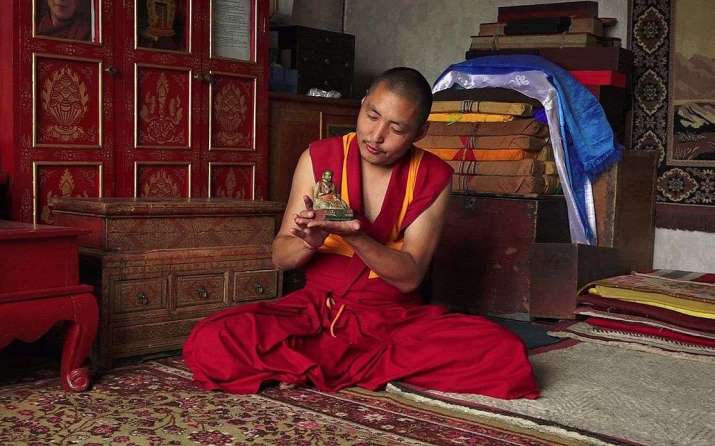
Lama Baasansuren Khadsuren. From weltmuseumwien.atLama Baasansuren Khadsuren. From weltmuseumwien.at
Baasansuren Khadsuren was born in 1977 in the fabled area of Kharakhorum, where the ruins of Genghis Khan and Ögedei Khan’s city lie. He grew up, like many other Mongolian children, with a secret basement in the household where his grandfather would store Buddhist scriptures and secretly practice. In 1988, he visited a former monastery that had been converted into a museum, and was deeply affected by the sight of the interior’s Buddhist paraphernalia. The devotion that stirred in him was so strong that he became a monk in 1991, at the age of 13. He spent four years memorizing texts, and then became a master of chanting at the age of 18. He graduated from Zanabazar Buddhist University at Gandan Monastery in Ulaanbaatar in 2000. By the time he had become abbot of Erdene Zuu, he knew that the time was ripe for institutional change, and that he would have an important role to fulfill in this change. 
As a monk active in the community, he is mindful of Mongolia’s political problems and the disenchantment of many citizens by the government’s corruption. His message is one of empowerment, leaving behind negativity and cultivating inner contentment, spiritual discernment, and authenticity. Indeed, he observes of the trends of materialism and emptiness in society:  “You can only become truly rich when you are non-attached.”
Apart from being the first Mongolian lama with a Facebook page and being an environmental advocate, he is also famous for his melodious voice, which he has used in his Dharma talks to encourage listeners to sing along to “Om Mani Padme Hum,” and in public performances of Mongolian mantras and songs. He is, alongside accomplished practitioners like Kunze Chimed, one of the few serious yogis in the country with a comprehensive knowledge of chakras and meditation techniques. 
“I want to be accessible to people,” he says. “I like to ask what difficulties they have in their daily lives through email and social media.” His students seem to find this channel (Facebook), commonplace though it might be today, extremely useful when it comes to communicating with such a senior lama. Baasansuren Khadsuren also organizes monthly or bi-monthly social events for people with physical and psychological difficulties featuring dance and music. “We are too used to bottling up mental illness or other handicaps and not sharing it with others who might be able to provide help and comfort,” he says. “I would like to gradually change that mindset.” 
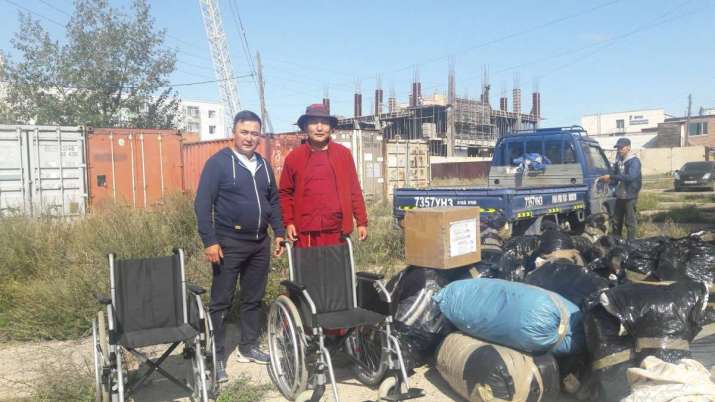
Lama acquiring wheelchairs for the local handicapped community. From Erdenezuu Monastery Baasansuren FacebookLama acquiring wheelchairs for the local handicapped community. From Erdenezuu Monastery Baasansuren Facebook
Mongolian Buddhist scholar and professor of religious studies at UC Santa Barbara Vesna Wallace, who has known Lama for almost two decades, agrees with him, noting that a significant shift of demographics has taken place over the past decade or so, with a rising number of students and young professionals being attracted to his vision of Buddhist practice. It is essentially a recalibration of the monastic-lay relationship, a new way for monks to relate to the rest of society by contributing to the improvement of the people’s psychological wellbeing. “Superstition and rituals are not the heart of Buddhism,” Baasansuren Khadsuren says. “With so much upheaval and difficulties in the past few decades, the monasteries and laypeople have become disconnected. I hope to bridge that gap through social and environmental concerns.”
So far, he has received support from many urban monasteries. The rural monasteries seem more cautious and conservative about his style and priorities, but he is tremendously—and perhaps rightly—confident, that he has seized upon the needs of the present Mongolia, and captured the attention and energy of people who are hungry for authentic spirituality in the midst of civil difficulties and government failure, which were not only remnants of the Soviet era but remain endemic issues today. 
“We need to honestly ask ourselves what we would like our purpose in life to be. I like to talk about the mind to heart journey. If people always follow their minds, suffering will be inevitable. The heart always says the right things and tells the truth. I would like to advise people to always follow their heart,” he says. “The heart is never wrong.” 
See more

Source:www.buddhistdoor.net
Share:

What is it like to be a missionary in Mongolia?

.- When Francisco Javier Olivera was born, his mother offered him to the Virgin Mary, praying that he would become a missionary in Asia.
Olivera’s mother told him about the consecration after he was ordained a priest in Japan 22 years ago. Since then, he has served as a missionary, not only in Japan, but in China and Mongolia as well.

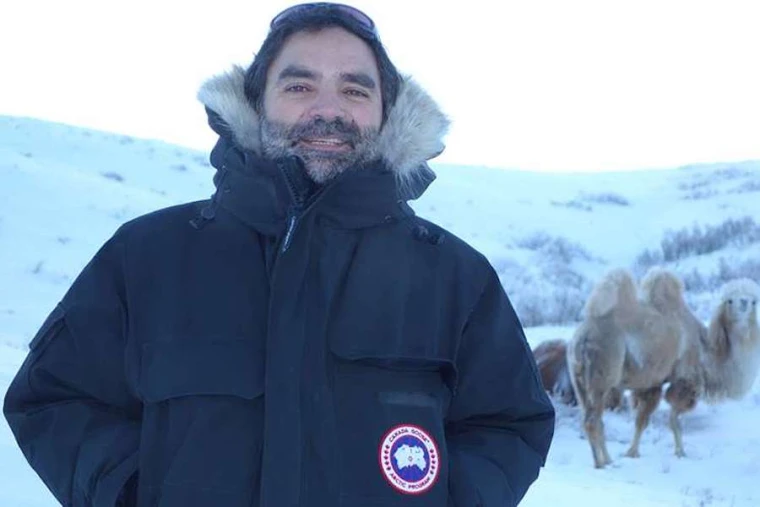
Fr. Francisco Javier Olivares, missionary priest in Mongolia. Photo courtesy of Fr. Olivares.
Fr. Francisco Javier Olivares, missionary priest in Mongolia. Photo courtesy of Fr. Olivares
Fr. Olivera was born in Salamanca, Spain, 47 years ago. He is a diocesan priest working with the Neocatechumenal Way and has been a missionary for 28 years.
In an interview with Religión En Libertad, Olivera said his priestly and missionary vocation grew “little by little,” influenced by a series of missionaries and catechists who stayed at his family’s house.  

He also believes that his mother’s prayers made a difference.
“She offered me to Our Lady to be a missionary in Asia. I didn't know that, she told me in Takamatsu, [Japan] when the celebration of my ordination was over,” the priest said.
The priest said that Japan has been his toughest assignment, because there “you felt more loneliness, even being in a parish,” while China impressed him very much since “the people have a lot of curiosity and if there were freedom it would be amazing.”
After four years of living in Mongolia, he said he still finds the assignment “quite difficult because of the language, the cold, the pollution, the culture, and especially because of all the legal impediments we have, which are many.”
The Catholic Church arrived in Mongolia in 1992, when three missionaries of the Immaculate Heart of Mary were sent to the country following the arrival of democracy and safeguards for religious liberty in the country’s constitution.
Later, other congregations of priests and religious arrived, as well as lay missionaries. Today, there are just over 1,200 Catholics.
“The parishes are young in every respect, many young people are being drawn to the Church…We already have the first Mongolian priest ordained two years ago and now we have a deacon,” Olivera explained.

Olivera works with a team of lay missionaries and families in the Neocatechumenal Way. He celebrates Mass each day, studies Mongolian, and teaches Japanese at a company where he tries to “take advantage of the occasion to talk about God, especially through songs.” He also teaches biblical catechesis at the local parish.
Conversions are not frequent, he said, but he has seen people “drawing close to the Church, especially through all the various social works being carried out – assistance to the impoverished elderly, poor and abandoned children.”
“Without a doubt, the love the missionaries are showing is gradually attracting the [locals].”
As an example, the priest recalled a young man who “was searching for God in beauty.” One day, the man entered the Catholic cathedral, where he saw a group of elderly women praying. Moved by the beauty of the scene, the young man decided to be baptized.
“Some people think that this life is crazy, but I desire it for myself,” Olivera told Religión en Libertad. “If it's getting a bit crazier, better yet, the more we see that it is God who is behind it.”
This article was originally published by our sister agency, ACI Prensa. It has been translated and adapted by CNA.

Source:www.catholicnewsagency.com


Share:

Mongolia’s first bishop passes away

Filipino Bishop Wenceslao Padilla, the Prefect of Ulaanbaatar, who started the Catholic mission in Mongolia 1992 died on Sept. 25.
Filipino Bishop Wenceslao Padilla, the Prefect of Ulaanbaatar, the first and only bishop of Mongolia who started and oversaw the growth of the Catholic Church in the East Asian nation, died on Tuesday, Sept. 25.
The bishop from the Congregation of the Immaculate Heart of Mary, widely known the Scheut Missionaries, succumbed to heart attack in Mongolia’s capital, Ulaanbaatar.  He was 68.
His congregation expressed its condolences and prayers to the Church in Mongolia, and to his family and friends.

Philippine and Asian bishops’ condolences

The Catholic Bishops’ Conference of the Philippines (CBCP) also expressed its condolences.  Bishop Pablo David, CBCP Vice President said he personally witnessed how Bishop Padilla cared for his flock in Mongolia.  “I also noted his (Padilla) genuine respect for the Mongolian culture. His simplicity and humility were very edifying,” Bishop David said.
The Federation of Asian Bishops’ Conferences (FABC) also expressed its sorrow at the death of Bishop Padilla.  
Fr. William LaRousse, FABC Acting Assistant Secretary General, said Bishop Padilla represented the other associate members of the federation’s central committee for 3 terms from 2009 to 2017.  He gratefully remembered the late bishop’s generosity and availability as president of various FABC plenary assemblies and programmes, as well as his valuable contributions during the central committee executive and offices meetings.

Filipino missionary

Born in Tubao on 28 September, 1949, Bishop Padilla was ordained a priest in 1976 and sent to Taiwan the following year on his first mission assignment. 
From 1985 to 1990, he served as Provincial Superior of the Chinese Provinces of his congregation, which also covers Taiwan, Hong Kong and Singapore.
Shortly after establishing diplomatic relations with Mongolia in 1992, the Vatican entrusted the new mission in the East Asian nation to the Scheut Missionaries.  Bishop Padilla led 2 fellow missionaries to start the mission the same year. 
Four years ago Bishop Padilla had told the international Catholic charity, Aid to the Church in Need that they started the Mongolian mission from “scratch”.  “The first Holy Masses were read in a hotel. After that we rented apartments and forged initial links with believers through international organizations and embassies,” he said.

First  bishop of Mongolia

As the superior of the mission, he was appointed Prefect of Ulaanbaatar in 2002.  St. Pope John Paul II in August 2003 appointed him bishop. He thus became the first bishop of Mongolia. 
In 2016, Bishop Padilla ordained Mongolia’s first native-born priest, a young man he baptized as a child many years ago. Today, the Church in Mongolia has 20 foreign missionaries and 50 nuns from 12 religious congregations working for about 1,300 Catholics and the country’s poor.
Bishop Padilla’s funeral will be held in Ulaanbaatar Cathedral on October 14. (Source: UCANEWS)
Share:

Mongolia: Mourning the first Bishop of Mongolia

Source: Fides News
Bishop Wenceslao Padilla, of the Congregation of the Immaculate Heart of Mary and the first Bishop of Mongolia, died on 25 September at the age of 68, following a heart attack. He had accompanied the young Mongolian church for the past 26 years.
Bishop Padilla, of Filipino nationality, was sent to Mongolia in 1992, following the reopening of the nation after the dissolution of the Soviet Union, and he remained there. Today the local Church - a community of 1,300 faithful - is in mourning and remembers him as a person of great faith, who dedicated his whole life to the poor and to the education of children and young people.
In a message sent to Fides, Pablo Virgilio David, vice-president of the Episcopal Conference of the Philippines and Bishop of Kalookan, expressed the condolences of the Filipino Church to the Church of Mongolia, "the youngest Catholic Church in the world", praising "the Bishop's contribution to evangelisation in Mongolia". He said Bishop Padilla "gave himself wholeheartedly to a foreign people, in a distant land; God used him to touch the hearts of so many people in Mongolia".
When Bishop Padilla arrived in Mongolia with two of his CICM confreres, there was no church or Catholic in Mongolia. However, he discovered some Catholic foreigners among the personnel who worked in foreign embassies. Thus prayer meetings began in the house, where Sunday Mass was celebrated. As the number of participants grew, community halls were rented to celebrate Sunday mass. Only years later were churches built.
Thanks to the pastoral work of Bishop Padilla and the first priests, the "little flock" of the church in Mongolia was reborn, a community that has always been committed to its mission through dialogue with cultures, religions and poor people. From the beginning, the Catholic community held a sensitive and respectful attitude towards local cultures, establishing good relations with other religions, while dealing with the service and social assistance of many disadvantaged, poor and marginalised people in society. The territory entrusted to Bishop Padilla included all of Mongolia - two and a half million people, in the Apostolic Prefecture of Ulaanbaatar. At the time of his episcopal ordination, in 2003, Bishop Padilla said: "The priority is to be on good terms with everyone, without discrimination, bearing a testimony of Christ's love to Buddhists, other Christians, Muslims and the whole people of Mongolia". Right from the beginning, Padilla conquered the heart of the Mongolian people and was greatly appreciated among Russian Orthodox Christians, Buddhists, shamans and members of non-Christian religious groups.
As a Bishop, he immediately committed himself to raising the educational level of the community of the faithful, from kindergarten to university. "We have sponsored students to go abroad and graduate in a foreign university, but I want our young people to have a good education here in their country", he said.
After 26 years of Bishop Padilla's ministry, missionaries came to Mongolia from Africa, Asia, Europe and Latin America. They found technical schools, orphanages, homes for the elderly, clinics, shelters for domestic violence and nurseries. These centres are often set up in suburbs where basic services are missing. The beneficiaries are poor people and children from very poor families. Through them, the Catholic mission was also able to enter into relations with the children's siblings and parents, thus expanding the service of assistance, healing and education.
The Catholic Church of Mongolia celebrated its 25th birthday in 2017. At that time, one of the priests there said, "the faith of these people is as courageous as the bands of grass that shyly emerge from the rocky ground of the Gobi Desert".
Share:

Mongolia’s first bishop, Msgr. Wenceslao Padilla, has died

Ordained priest in 1976, the Filipino prelate reached Mongolia in 1992 together with two confreres to open a mission. In August 2003, he was named bishop of Mongolia by Pope John Paul II. Throughout the country there are now seven parishes and three missionary centers, serving about 1,300 Catholics. In 2016, Msgr. Padilla celebrated the ordination of the first Mongolian priest.


Ulaanbaatar (AsiaNews) - Mongolian Catholics are mourning the sudden death of Msgr. Wenceslao Selga Padilla (photo), apostolic prefect of Ulaanbaatar and first bishop of the young Catholic community in Mongolia. The Filipino prelate, belonging to the Congregation of the Immaculate Heart of Mary (Cicm), died yesterday in the Mongolian capital at the age of 68, from a heart attack.
Ordained priest in 1976, Msgr. Padilla reached Mongolia in 1992 together with two confreres, to open a mission "where the Church had no physical structure or members to be considered its own". The country had just abolished the Soviet-style socialist political system and established diplomatic relations with the Holy See. "The idea of giving birth to a Church from nothing seemed like a frightening effort, full of challenges, but also of excitement", the bishop told AsiaNewsin 2012.


In August 2003, he was named bishop of Mongolia by Pope John Paul II. With his work, Msgr. Padilla has contributed to the growth of the local Church. Throughout the country there are now seven parishes and three missionary centers, serving about 1,300 Catholics. There are 77 missionaries in all, coming from 22 nations of the world and belonging to 10 congregations. Among these, there are 26 priests and 45 nuns, plus a voluntary lay woman. On August 28th 2016, Msgr. Padilla celebrated the historic ordination of Fr. Joseph Enkhee-Baatar, the first Mongolian priest, in the cathedral of Saints Peter and Paul in Ulaanbaatar.
Two weeks ago, the apostolic prefect had taken part in a pilgrimage to Seoul along with other Asian bishops. On September 14th, at the sanctuary of the Seosomun martyrs, the ceremony with which the Vatican proclaimed the South Korean capital "international pilgrimage site" took place.

Source:Asia News
Share:

Church leaders mourn passing of Mongolia’s first & only Filipino bishop

By Christina Hermoso
The Federation of Asian Bishops’ Conferences (FABC) has expressed sadness over the passing of Filipino Bishop Wenceslao S. Padilla, the first bishop of Mongolia, who succumbed to heart attack last September 25.


The Federation of Asian Bishops’ Conferences (FABC) has expressed sadness over the passing of Filipino Bishop Wenceslao S. Padilla, the first bishop of Mongolia, who succumbed to heart attack last September 25.
(photo courtesy of CBCP News Facebook page / MANILA BULLETIN)

In a Catholic Bishops’ Conference of the Philippines (CBCP) News post, Fr. William LaRousse, FABC acting assistant secretary general, cited Padilla’s contribution to FABC. Padilla, he said, represented the other associate members of the body’s central committee for nine years, from 2009 to 2017, as he served three terms.
“We are deeply grateful for his generosity and availability as presider of various FABC plenary assemblies and programs as well as his valuable contributions during the central committee executive and offices meetings,” LaRousse said.
Bishop Padilla was found lifeless in his office in Ulaanbaatar, Mongolia at around 7p.m. local time on Sept. 25. Local authorities have ruled out foul play in the sudden demise of the prelate, who would have turned 69 years old today, September 29.
His funeral will be held in Ulaanbaatar Cathedral on October 14 Padilla was ordained a priest for the Congregation of the Immaculate Heart of Mary (CICM) in 1976 and was sent to Taiwan in 1977 as his first mission assignment. From 1985 to 1990, he served as Provincial Superior of the Chinese Provinces of CICM, which also covers Taiwan, Hong Kong, and Singapore.
Two years later, together with two other confreres, he started a new mission in Mongolia that the Vatican had entrusted to CICM.
As the superior of the mission, he was made Prefect of Ulaanbaatar in 2002 and was appointed Mongolia’s first bishop in 2003
Twenty five years hence, Mongolia now has more than 60 missionaries from 12 religious congregations serving about 1,200 Catholics in six parishes.

Source:Manila Bulletin

Share:

Mongolia’s first Filipino Catholic bishop dies

By Leslie Ann Aquino
Mongolia’s first bishop, Filipino bishop Wenceslao Padilla, has died Tuesday, September 25.
Padilla, 68, died of heart attack in Ulaanbaatar, Mongolia’s capital.
The prelate’s death was announced by the CBCP in a News post.


Bishop Wenceslao Padilla (Screenshot from CatholicRadioTVNet's YouTube video / MANILA BULLETIN)
Bishop Wenceslao Padilla
(Screenshot from CatholicRadioTVNet’s YouTube video / MANILA BULLETIN)
In a statement, the Congregation of the Immaculate Heart of Mary (CICM), where Padilla belongs, expressed condolences and prayers to the Church in Mongolia, and to his family and friends.
Caritas Asia was also saddened by Padilla’s death, whom they called as “a strong supporter of Caritas work.”
“We will always remember him as an inspiration for his passion of serving others and commitment to his work,” it said.
Ordained priest in 1976, Padilla arrived with two confreres to open the Mongolian mission in 1992, shortly after the Vatican established diplomatic relations with the East Asian nation.
Padilla is the only bishop in Mongolia, which was opened about 25 years ago following the fall of communism.
They started from “scratch”, the bishop once told international Catholic charity, Aid to the Church in Need.
“The first Holy Masses were read in a hotel. After that we rented apartments and forged initial links with believers through international organizations and embassies,” he said.
Today, the local church has 20 foreign missionaries and 50 nuns from 12 religious congregations working for about 1, 300 Catholics and the country’s poor.
Padilla was appointed bishop of Mongolia by then Pope John Paul II in August 2003.
In 2016, Padilla ordained Mongolia’s first native-born priest, a young man he baptized as a child many years ago.


Share:

Global Religion and the United Front: The Case of Mongolia

Publication: China Brief Volume: 18 Issue: 12


‘Sinified’ religion has a role to play in Xi’s elevation of the United Front (UF) into a foreign policy tool. Informed by Qing imperial policy, CCP voices highlight the potential of state-managed Buddhism to advance PRC policy in Mongolia, where it has become a salient component of UF activity. Attention has been paid to the ongoing Jebtsundamba Khutugtu succession process, a sensitive issue, as it is perceived as a challenge the CCP’s neo-imperial reincarnation management system, which will undergo a major test when it comes to the selection of the next Dalai Lama reincarnation.
Meanwhile, state-led interactions with Mongolian monasteries, some unreported even in Mongolia, reveal attempts to cultivate senior lamas and exploit internal divisions to counter Dharamsala’s influence and earn global Buddhist ‘discourse power’. Although the potential of religion as an influence tool in Mongolia is limited, the tactics used illustrate the Xiist expansion of UF work beyond its traditional domestic-diasporic domain.
Sinified Buddhism Goes Global
CCP religious policy involves both repression and co-option. Co-opting religion and other non-Party forces, both inside and outside China, is the job of the United Front Work Department (UFWD). Although UF tactics are a Leninist creation, prescribed to the CCP in the 1920s by Soviet advisors, the system the UFWD uses to manage religion is a post-Comintern innovation whose closest parallel is in North Korea. To survive as “patriotic” tools of the Party, imported religions such as Christianity and Buddhism must undergo “Sinification” (中国化), a demand stressed under Xi (CPC News, April 2016; People’s Daily, October 2016). The maxim “love the country, love religion” (爱国爱教) summarizes what the Party expects of religious believers.
Since taking office, CCP General Secretary Xi Jinping has dramatically expanded the scope and importance of the UFWD’s role (China Brief, April 2018). Two characteristics of this unprecedented expansion of the UF system affect international religious policy. The first was the absorption of the State Administration of Religious Affairs (SARA, 国家宗教事务局), a government body whose duties included the execution of PRC religious policy, into the UFWD. The China Buddhist Association (CBA, 中国佛教协会), previously overseen by SARA, is thus now officially placed under the CCP. A second characteristic is the global expansion of the scope of UF work, evidenced by the recent use of UF entities to influence mainstream societies abroad. Previously, co-option of foreign religious organizations tended to focus on Overseas Chinese churches (To, 2009, p. 151) and Tibetans abroad (Journal of Current Chinese Affairs, 2012). However, efforts to create a more central role for the PRC in international Buddhist organizations, which once focused on Taiwan, have now taken a more global turn, at times placing the CCP in competition with India (Carnegie India, March 2017).
A visible figure in this global Buddhist push is Yinshun (印顺), a vice president of the CBA and president of its Hainan chapter. Yinshun is the abbot of three temples: two in southern China, and one in Lumbinī, Buddha’s birthplace in Nepal (Fenghuang Fojiao, October 2017; Caijing, December 2017) [1]. Yinshun also heads the Nanhai Academy of Buddhism. The academy, which opened in the southern PRC city of Sanya in 2017 to provide training in Chinese, Tibetan and Theravāda Buddhism, immediately eclipsed a long-planned (and long-delayed) Indian competitor institution, Nālandā University. The UF significance of the Nanhai academy is illustrated by a visit to the facilities, soon before their inauguration, by the head of the Hainan UFWD (UFWD, September 2017).
According to Yinshun, the goal of this endeavor is to offer the world a “Sinified Buddhist system” (Xinhua, September 2017). Although primarily religious in nature, this system is not insulated from political concerns. A roundtable Yinshun organized reached what he described as a “consensus” that “the South China Sea is Chinese” and “China has already become the center of the world’s Buddhism,” hopefully opening “a leading role in the world’s religious development” (Caijing, December 2017). On social media, he praised Xi’s report to the 19th Party congress—which he claimed to have copied out by hand—as “contemporary Buddhist scripture” (China Digital Times, December 2017).
PRC Policy towards Mongolian Buddhism Globally
A branch of Tibetan Buddhism is the main religion in Mongolia. Although explicit UFWD statements on global policy toward Mongolian Buddhism are scarce, a set of goals can be distilled from available sources. Last year, the Party Secretary at the Tibetan Academy of Buddhism in Beijing advocated helping “countries and territories along the ‘Belt and Road’” satisfy their demand for religious specialists and scripture,”  showcasing “the results of our Party and country’s ethnic and religious policies” (UFWD, June 2017).
An earlier set of policy recommendations called on China to take the lead in coordinating the establishment of a unified system for the search, recognition and final announcement’ of incarnate lamas in the three countries. The article deals with the reincarnation of the Jebtsundamba Khutugtu, Mongolia’s most senior lama, a potential source of friction with the PRC [2]. These recommendations were published pseudonymously by a Hong Kong think tank established by the PRC energy company CEFC (HKEJ, November 2011) [3]. Former SARA head Ye Xiaowen (叶小文), a senior figure in religious policy involved in the Panchen Lama reincarnation process, was associated with the think tank at the time. Both of these sources mention restricting the influence of the Dalai Lama as an explicit goal.
Recent interactions between Mongolian monasteries and PRC-based organizations are consistent with these goals, in some cases directly implementing them.
‘One World, One Buddha, One China’
The UF system appears to be exploiting divisions among Mongolian clergy. Some of Mongolia’s most important Buddhist monasteries have had contacts with the UFWD, SARA and CBA. These include the Amarbayasgalant, the country’s main place of Dorje Shugden worship, and the Ikh Khüree monastery in Ulaanbaatar, whose abbot Sanjdorj is noted for a bitter rivalry with the capital’s main monastery [4]. Sanjdorj has criticized the Dalai Lama’s visits to Mongolia. In 2016, he regretted the Dalai Lama had been invited “without the approval“ of Mongolia’s “neighbors” (time.mn, November 2016). His views on the visit were quoted approvingly by PRC state media (Huanqiu, Nov 2016). A media outlet close to Sanjdorj has provided positive coverage of contacts with Chinese Buddhism and the 19th Party Congress (control.mn; March 2017, August 2016, October 2017); its editor-in-chief attended the CCP Propaganda Department’s Chinese Tibet Development Forum 2016 (chinanews, July 2016). Sanjdorj was also present when a foundation established by the Bank of China donated 9 million tugriks ($4,866 at that time) for another monastery (中蒙文化教育暨社会发展基金, Jan 2015).
Sain Nomuun monastery in Nalaikh, one of Ulaanbaatar’s poorest districts, provides another excellent example of the UF in action. Implementing the vision laid out by its Party secretary, the Tibetan Academy of Buddhism (藏语系高级佛学院) in Beijing received its first contingent of foreign trainee monks in November. The monks came from the Sain Nomuun monastery. Led by Nergüi, their abbot, they were received by officials from the SARA, the CBA, and the PRC-sanctioned Panchen Lama (UFWD, 藏语系高级佛学院, November 2017) [5].
Nergüi and Yinshun have exchanged visits. In June 2017, Yinshun visited the Sain Nomuun monastery, and, according to a news item posted to the UFWD website, Nergüi requested he send teachers to the Sain Nomuun (UFWD, June 2017). Members of Nergüi’s family, who run a company that helped build the monastery, were present at some of these meetings in China and Mongolia. The family belongs to the local business and political elite, including a former minister and the current chairman of the Ulaanbaatar city council.
Yinshun has also appointed Nergüi a guest professor at the Nanhai Academy (南海佛学院, June 2017) In November, Nergüi was at Yinshun’s South China Sea Buddhism Roundtable in Shenzhen, attended by then-SARA director Wang Zuo’an (SARA, Nov 2017). Wang is now a vice-director of the UFWD.
The roundtable’s declaration brims with Xi-speak: “New Era”, “Maritime Silk Road”, “Community of Shared Destiny”. A Hainan CBA social-media account carried a Chinese version of Nergüi’s speech (Weixin, 2017). It praises Xi’s geopolitical initiatives and derives the PRC’s territorial ambitions from theological principles: “We don’t have many Buddhas, but just one Buddha, one world … All lamas and Buddhist countries support the One-China Policy. We only have one Buddha, we support the One-China Policy.”[6]
Conclusion
Interactions by PRC entities with Mongolian Buddhism tend to occur through vehicles with clear UF links, including SARA and UFWD officials, part of an application of UF policies to global Buddhism that has yielded early successes. Entities linked to the PRC party-state have cultivated local religious figures inside Mongolia and exploited divisions within the local Buddhist community, investing the PRC’s ‘religious capital’ to supply artifacts and train monks. The Sain Nomuun monastery’s endorsement of the PRC’s territorial ambitions and global Buddhist foray have also helped create a channel to Mongolia’s political and business elite.
These successes should not be overstated. The UF tends to operate in a low-profile fashion, which can limit the propaganda value of its successes, both in Mongolia and elsewhere. Prevalent anti-Chinese sentiment inside Mongolia also naturally limits the soft-power potential of these contacts; PRC links have the potential to hurt a lama more than they help his PRC partners.
Despite this, the Mongolian example shows a UF system bent on exploiting the religious capital acquired through the appropriation of Tibetan Buddhism. While the limitations of its Mongolian instantiation are defined by local conditions, the expansion of the domain of UF work to include religious groups abroad is of global significance. Speculatively, Xi’s potentially lifelong rule could give UF cadres enough time to venture beyond the neo-Qing model and apply similar tactics to religions other than Buddhism.
Miguel Martin, who frequently writes under the penname Jichang Lulu, is an independent researcher with an interest in China’s activities in the Arctic and the United Front. Martin’s blog frequently is the first to break news on these subjects in English. Follow him on Twitter at @jichanglulu.
Notes
[1] Two Chinese projects have been proposed to develop Lumbinī as a tourist and religious complex, first by an NGO led by businessman Xiao Wunan 肖武男, then by the CBA itself (WSJ, Aug 2013; rediff, May 2016).)
[2] The legitimacy of the ninth reincarnation, who died in 2012 in Ulaanbaatar, is a delicate topic in the PRC. As prescribed by the Comintern, Mongolia had forbidden further reincarnations after the eighth died in 1924, but a ninth was secretly recognized by the Dalai Lama. China discreetly protested his first visit to Mongolia in 1999 (refworld, 2003). A tenth reincarnation has been identified, although, as the Dalai Lama stated during a 2016 visit to Ulaanbaatar, the reincarnation is too young to be enthroned. Although Beijing vehemently condemned the visit, and retaliated against Mongolia economically and diplomatically, it refrained from public discussion of the reincarnation issue, only “hoping” Mongolia would handle the affair “autonomously,” a coded reference to its desire that the reincarnation’s enthronement and training take place without Dharamsala’s involvement (PRC embassy to Mongolia, Jan 2017).
[3] CEFC, which has recently run into financial difficulties, has known links to the PLA and has been involved in global influence activities (South China Sea Conversations, Jun 2013; Project 2049, Oct 2013; Sinopsis, Jun 2018).
[4] The Dalai Lama’s disapproval of the worship of the deity Dorje Shugden has led to a dispute with its followers, often aligning them with PRC policies (Info-buddhism, 1998, 2014). The PRC government has allegedly provided “clandestine support” to Shugden followers protesting the Dalai Lama (Reuters, Dec 2015; ICT, Apr 2015). PRC state media (CPC News, Apr 2010; Xizang ribao, Oct 2011; tibet.cn, Jan 2018; Guangming ribao, Jun 2012) and officials (CPC News, Jun 2013) have strongly criticised the Dalai Lama’s treatment of Shugden followers and covered Shugden protests against him in a positive light (tibet.cn, Aug 2015). Shugden worship is promoted within Tibet. Some Shugden followers have supported PRC government policies (Tsem Rinpoche, Oct 2017). Amarbayasgalant representatives attended a Shugden conference in Nepal in 2018, in which a monastery inside Tibet also reportedly participated (Kathmandu Tribune, Jan 2018; Tsem Rinpoche, Feb 2018).
[5] In 1995, the PRC government took into custody the boy recognized as 11th Panchen Lama by the Dalai Lama and enthroned a reincarnation of its own choice. Nothing is known of the boy’s subsequently.
[6] The PRC demands other countries uphold a “One-China Policy,” which it understands as acquiescing to its claim to sovereignty over Taiwan.

Source:https://jamestown.org
Share:

Facebook page

Powered by Blogger.

Categories

Advertising in Mongolia An Asian Development Bank Culture Editorial of the Mongolianviews education Environmental protection Famous Mongolians Foreigners in Mongolia Inner Mongolia Ivanhoe Mines Mongolia Adventure Mongolia agriculture Mongolia air pollution Mongolia analysis Mongolia and Armenia Mongolia and Asian Development Bank Mongolia and Australia Mongolia and Azerbaijan Mongolia and Belorussia Mongolia and Bulgaria Mongolia and Cambodia Mongolia and Canada Mongolia and central Asia Mongolia and China Mongolia and Cuba Mongolia and Czech Mongolia and donors Mongolia and EU Mongolia and Germany Mongolia and Hongkong Mongolia and Hungary Mongolia and IFC Mongolia and IMF Mongolia and Ind Mongolia and India Mongolia and Indonesia Mongolia and Inner Mongolia Mongolia and Iran Mongolia and Israel Mongolia and Italy Mongolia and Japan Mongolia and Kazakhstan Mongolia and Korea Mongolia and Kuwait Mongolia and Kyrgyzstan Mongolia and Malaysia Mongolia and Nato Mongolia and North Korean Mongolia and Poland Mongolia and Qatar Mongolia and Russia Mongolia and Russia and Mongolia and China Mongolia and Singapore Mongolia and South Korea Mongolia and Taiwan Mongolia and Thailand Mongolia and the world Mongolia and Tibet Mongolia and Turkey Mongolia and UK Mongolia and Ukraine Mongolia and UN Mongolia and US Mongolia and USA Mongolia and Vietnam Mongolia Banking Mongolia blind Mongolia Cashmere Mongolia Christianity Mongolia civic society Mongolia Corruption Mongolia crime Mongolia diplomacy Mongolia Economy Mongolia Education Mongolia Energy Mongolia environment Mongolia Finance Mongolia Health Mongolia History Mongolia holiday Mongolia in international media Mongolia Industries Mongolia investment Mongolia Joke Mongolia law Mongolia LGBT Mongolia medical Mongolia military Mongolia Mining Mongolia Mining Developments Mongolia Mortgage Mongolia natural disaster Mongolia news media Mongolia Nuclear Mongolia Petroleum Mongolia Politics Mongolia Poverty Mongolia public announcements Mongolia railways Mongolia Religion Mongolia slums Mongolia society Mongolia Sports Mongolia Stamp Mongolia Sumo Mongolia telecommunication Mongolia tourism Mongolia trade Mongolia Transportation Mongolia Urbanization Mongolia Wild Life Mongolian Agriculture Mongolian and Cuba Mongolian Archeology Mongolian Climate Mongolian Food Mongolian Gay Mongolian Government news Mongolian History Mongolian Kazakh Mongolian Meat Mongolian Military Mongolian Mining Development Mongolian Movie Mongolian News Mongolian Parliament Mongolian Political news Mongolian Press Mongolian Songs Mongolian Sumo Mongolian Women Mongolian Youth Mongolians abroad Moninfo Opinion Oyu Tolgoi Investment Agreement Photo news Press Release Rio Tinto Tavan Tolgoi coal mine Ulaanbaatar development Weird expatriates in Mongolia World bank and Mongolia

Blog Archive

Followers