Showing posts with label Mongolia holiday. Show all posts

Mongolia National Day

Press Statement
John Kerry
Secretary of State
Washington, DC
July 11, 2014


On behalf of President Obama and the people of the United States, I extend our best wishes to the people of Mongolia as you celebrate your National Day on July 11.
Mongolia is more than a mosaic of different cultures and communities. It is a model for countries undergoing democratic transitions.
In the 24 years since Mongolia took its historic “decision for democracy,” the Mongolian people have made great progress in building a society that celebrates diversity, respects the rule of law, and upholds the universal rights and fundamental freedoms that make all nations stronger.
By embracing these universal values, Mongolia has become a strong force for stability and a reliable partner. Our shared values and common interests will continue to unite our two governments and our two peoples.
The United States looks forward to strengthening our partnership in the years to come.

Source:US State Department
Share:

Happy Tsagaan Sar or Welcome to the Year of Wooden Horse-from the staff of Moninfo news service

 Цагаан сар ба H1N1, үнсэлдэж үнгэлдэхээ больё

As today is eve of the Mongolian Lunar New Year-Tsagaan Sar, we, staff of Moninfo news service would like to wish Happy Tsagaan Sar to all our readers who reads what we we produce and publish.
We are saying Goodbye to passing year of Snake and welcoming the year of Wooden Horse of 17th Rabjun known as Yalguusan or Glorious (Rabjun is 60-year cycle of Mongolian astrology).


May the coming year of Wooden Horse bring you happiness and fortune…

Staff of Moninfo news service
Share:

Ulaanbaatar prepares for Tsagaan Sar-Lunar New Year

Ger areas illuminated
New lights are being set in ger areas in accordance with an Ulaanbaatar mayor's resolution on measures to be taken in preparation for the national holiday-Tsagaan Sar. Streets and road lighting in ger areas were checked thoroughly and locations where new lights were needed were defined beforehand. Some ten locations in the Bayanzurkh, Songino-Khairkhan and Khan-Uul districts were found to be in need of new illumination. On 21-22 January new LED lights of 50 watts were set in 8 streets around Bayankhoshuu's last bus stop area.
New lighting is being placed on the existing electric poles, which enables saving time and money, reported the capital's department of press and public relations. There are over 28 thousand lights in six central districts of the capital and seven companies are in charge of lighting under the control of the Ulaanbaatar Governor's office. Because ger areas expand their boundaries every year due to migration from the countryside, ger areas lack illumination.According to police reports, crime occurs more on unlight streets in the evening and nighttime. Last year all districts of the capital were connected to a united system of lighting and work to replace yellow bulbs to LED lights started, because yellow bulbs break easily when voltage falls.

Public cleaning campaign
On January 18, a public cleaning campaign ran in the capital. Over 32 thousand persons from public organizations, companies and schools and colleges participated actively in the campaign, cleaning a total of 119.2 ha sites. They removed trash and debris that accumulated in the streets and cleaned icy roads and pedestrian walkways. The Ulaanbaatar Governor's office reported that 3.123 tonnes of garbage, which is 1.5 times more than usual days, were transported to trash dumpint sites on this day. 
Garbage pick-up frequency increase before Tsagaan Sar and follow the holiday schedule during Tsagaan Sar.
Share:

Mongolian astrologists' forecast for the 'Year of Horse'

The Year of Horse will be abundant, peaceful and fruitful in terms of business according to the general Mongolian astrology. But, coming year of horse will be adverse for top-ranking authorities and pleasant for low and mid class officers and ordinary people. In his interview with the press, Khurelninj, an astrologist of the Gandantegchinlen Monastery said that weather will be unpleasant with strong winds at the beginning of the year and disasters such as fire and infectious disease may occur. The Year of Horse will be pleasant for young people and harsh for elders, infant, and youngsters. A conflict may arise between state authorities. If they reach a united agreement, the year will be plentiful and people live happily. For the world, countries in Europe and South East Asia may suffer from natural phenomena such as floods.For world politics, an economic ban and political servitude may come about due to contradictions and misunderstandings between states.
J.Gonchigsuren, an astrologist of the Tuvdenpeljeelin Monastery, said that the year of horse will be plentiful and peaceful.The year will be harsh for top-ranking authorities and pleasant for mid class officers and ordinary people.It is expected to be windy and stormy at the beginning of spring and will be rainless at teh end of the spring.The spring will continue longer. For the country, legislation will be tightened.
D.Natsagdorj, Hamba Lama of the Manba Datsan Monastery noted that the year of horse will be friendly and propitious for the people of Mongolia. But they should pay attention to certain things.
The spring will be longer and severe. Summertime will be rainless and hot. This year, people should prevent thesmselves from lightning and floodwater. They should pay special attention to crop harvesting. A lot of snow is expected in wintertime this year. 
Shaman D.Byambadorj said 2014 will be a good year. Spring and winter will be longer. The danger from sun and water is expected in the world because of global climate change. This is connected with the rapid development of civilization. In other words, humankind is suffering from dangers due to their improper treatment of nature and the environment. For Mongolia, everything is okay. For society, a change of movement is isa  must because it happens every year of the Horse. Quarrels and struggles concerning mining sector will become less intense, people will live happily and the state and government will operate smoothly and peacefully. This year, good luck and fortune will smile on all Mongolians.


Share:

Everything you didn’t know about Tsagaan Sar


Tsagaan Sar, literally translated to ‘White Moon/Month’ is Mongolia’s Lunar New Year Celebration. Every
year, Mongolians celebrate the ‘Tsagaan Sar’ that falls on different dates each year between winter and
spring (the exact date depends on the lunar calendar) somewhere between January 30 and February 27.

2014 Mongolia’s New Year Day will arrive on January 31, 2014. The ‘Year of the Water Snake’ has finished and the ‘Wooden Horse Year’ begins. The holiday is celebrated throughout Mongolia for three days. Tsagaan Sar is a holiday that celebrates the end of winter and serves to welcome a flourishing new year. Mongolians believe that success and luck for the coming year will be determined by how people spend the Tsagaan Sar Holiday. Moreover, Tsagaan Sar welcomes the new year by preserving rituals from ancient times and remains a significant nationwide holiday for consolidating social relations and networks.

In addition, Tsagaan Sar brings together family and friends – the problems and tribulations between
each other are put behind them and you start over fresh – you do not bring previous problems forward into the New Year.

History of Tsagaan Sar

The origins of Tsagaan Sar predate the Great Chinggis Khaan. The Mongols of olden times were in touch
with nature to a great degree. Their life and life styles were connected intimately with the earth and sky as
well as the seasons. They called them Mother Earth and Father Sky. They judged the season by the colors of the earth and its growing things–by the sharpness of the winds, by the positions of the moon, stars as well
as the sun. Taking positions of the stars for direction using the sun and the moon, they created nature’s clock
and their monthly as well as yearly calendar. The hours of the day and the years were named after animals,
days and months were named after colors. Noted in Marco Polo’s journal from the time of Khubilai Khaan were entries about Mongol traditions and he noted that the last month of the old year was called the black month as it was the coldest, darkest and had the shortest days of any month of the year.

Also, the next month was called the white month as it was the beginning of the end of winter and the beginning of a new year with spring soon to come.

In olden times before Chinggis Khaan, the Mongols celebrated in the fall of the year at the end of summer
the gracious bounty they had gathered and collected from the produce of their animals–various dairy products as well as dried and cured meats along with wild herbs, berries and other root crops. They would hold this harvest celebration before the onset of the long cold brutal winter ahead. In 1206, Chinggis Khaan was named Great Khaan and Ikh Mongol (Great Mongol) the country of Mongolia was created. At that time he moved the harvest celebration which was celebrating the end of the summer beginning fall to the dates that it is celebrated now which is the beginning of spring (white month) to celebrate the new life such as fresh grass, flowers blooming, baby animals being born. This is also to celebrate the birth of a new nation and the inauguration of the Great Khaan.
Tsagaan Sar symbolizes an abundance of milk; and for Mongolians, this is the reason they have always revered white. From times of old the Mongols have held the sayings of Mother Earth and Father Sky – as the Mother gives milk to her young the Mongols thank Mother Earth for her gifts of dairy products from the animals they keep – they give thanks by casting small amounts of milk to the four corners of the sky (compass directions). Mongols believe that milk is pure as it is white and without blemish and so they offer it as a blessing to God.

When someone is going on a long journey or perhaps to be assigned to the army, their Mother will usually
cast the milk to the sky and pray for a safe trip, to keep them safe and bring them back home safely. The same will hold for all special occasions like weddings or other special or serious times. The milk prayer will keep their way clean and safe. During Mongolia’s communist period, the government banned Tsagaan Sar and tried to replace it with a holiday called ‘Herder’s Day’, but the holiday was practiced again after the 1990 Democratic Revolution in Mongolia.

How the Tsagaan Sar is celebrated?

People prepare for Tsagaan Sar months ahead by cleaning everything possible. herders deliver new births
around this time from their herds of animals which are considered a blessing. Everything must be clean
even your language. Do not sew old clothes during this time, sew new clothes. If you owe money pay it back
before Tsagaan Sar, do not owe anyone anything. In addition, everyone is expected to heal quarrels and fill
every container in the house. All the remaining tasks that you have left, you need to finish before Tsagaan Sar
starts. Food for Tsagaan Sar festivity is unique. Every family makes several hundred to several thousands buuz (dumpling cooked by steaming) or bansh (small dumpling cooked by boiling): they prepare plenty of food for all relatives, neighbors and friends that visit the family. Food at Tsagaan Sar consists of brown and white foods – brown foods include meat, flour dumplings etc and alcohol. White foods are dairy products, cookies and alcohol made from mare’s milk called airag. Families put a feast of sheep rump, layers of traditional pastry (cookies) that erected on large plates by odd numbers and decorated with candies and dairy products, milk tea, airag, rice cooked with curd, steamed and boiled dumplings and much more
on the table.

The day before Tsagaan Sar is named ‘Bituun’ or no moon day. Bituun day families set up their tables,
people come over to show their respect and to honor their elders. Bituun night meal is started by eating foods of the  brown category. You eat brown foods first as the old year and all the bad things associated with it are gone. After brown food you consume white dairy food so you will be ready for the year, new day and new moment. On Bituun evening, the oldest person in the family is honored by all the extended family coming to their home to share food and play games such as Shagai. This is the celebration of the end of the old year – you always eat until you are full – this day you will not sleep over at someone else’s home
because your own home is important on this day – you do not want to leave it empty, so you return to sleep.

The day after Bituun is called Tsagaan Sar or New Year’s day. People get up early as the sun is rising
– all people put on new clothes – make new milk tea – the lady of the house takes milk tea outside and cast it to the four directions of the compass while praying for a good year. After this, all the members of the family with exception of husband and wife greet each other beginning with the oldest (husband and wife are considered one person so they don’t need to be greeted by each other). They are greeted by saying ‘Ta amar mend baina uu?’ which means ‘How are you doing?’ The older person’s arms go on top and the youngest go on the bottom like you are going to carry them holding their elbows. Elders are given a ‘Hadag’
which is a blue or white silk scarf, as a sign of deep respect and are wished good health and long life.

The answer back to the first greeting is ‘Amar mendee’ which means I am fine, I am good. This day people of the same age greet each other with one arm on top and one arm on the bottom. Pregnant women do not greet each other like this during their pregnancy as they believe their unborn child’s sex could be switched.
After the greetings are finished guests and family will be seated at the table – guests will open their hoorog
(snuff bottle) and will partially open the top and present it to their host and say ‘Ta saihan shinelj baina uu?’
Which means ‘how is your new year going?’ The host will say ‘Saihan saihan’ which means ‘good, good.’
Afterwards, the host sniffs at the lid and passes it back or if he wants, he can remove the top and take some of the snuff and sniff it up a little of the powder – it is up to each person on how they do this. The symbolism of the passing of the snuff bottle is new friendship and honoring friends and family. This day the first food that is eaten is white food (dairy foods) this means good luck, blessed life and good things coming for you. This day do not talk about any negative things, always be positive do not get angry. Each person gives gifts on Tsagaan Sar – not expensive material gifts – but things that you have – cookies, dairy products or any natural products. Mongolians usually avoid gifts of dark colors, and prefer not to give a single
item.
During Tsagaan Sar celebrations there are three things that you cannot do – first you cannot be angry – the
second is to not be greedy and the third is not to be sad. You clear your mind and spirit of all negative things
and open it up to pure clean positive thoughts. During these days you always help people and give with an
open heart. If people will truly follow and observe these customs, putting old problems behind them and looking forward to the future without negative thoughts or preconceived notions the world and their lives would be truly remarkable. After the greeting ceremony, another feast starts among the family.

When finished, people visit each other’s homes in order of age (youths go elders’ home to greet) and are
offered dumplings, milk tea etc. The hosts of the family generally provides gifts for the visitors. This way, the
feast continues (officially for three days, but in practice, it often goes on much longer when family members
travel long distances to greet one another). As the celebrations wind down, family and relatives repeat their
wishes for good health and happiness and that the incoming year will be peaceful without suffering or hatred.

Happy Tsagaan Sar !

Share:

100th anniversary of Mongolian Independence Day-Dec 29, 1911-Dec 29, 2011

One hundred years ago, this day Mongolia declared its independence during the collapse of the Qing Dynasty.
However, it wasn't until Mongolia declared its independence from China on Nov. 26, 1924, that Mongolia adopted its first constitution. Therefore, Nov. 26 is considered Mongolia's Independence Day. 

Read more about Mongolia's history below.


November 26 is a national Mongolian holiday. November 26, 1924 was the day that Mongolia declared itself as an independent country with the adoption of its first constitution. The Mongolian People’s Republic (MPR), a communist state, under the rule of the Mongolian People’s Revolutionary Party (MPRP), lasted until 1990.
Although, November 26 is the day that Mongolia turned into an official communist country, it’s still celebrated today as the day Mongolia gained its independence once and for all. Mongolia had been under Chinese rule by varying degrees of force for centuries. When the last dynasty of China, the Manchurian Qing Dynasty, fell in 1911, Bogd Khaan, the Holy King, declared Mongolia’s independence. This, however, wasn’t recognized by the new Chinese government.
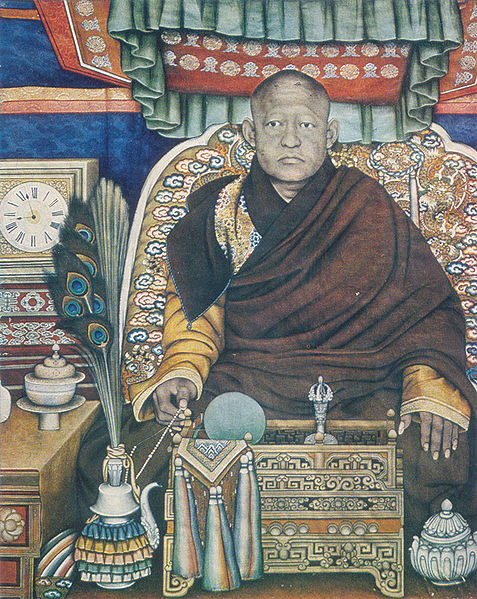
Bogd Khaan
Bogd Khaan
After many failed attempts to declare and fight for Mongolian independence, Mongolia turned to Russia for help. In 1915, the Khyagta talks took place between China, Russia, and Mongolia in order to discuss the political status of Mongolia.The Khyagta meetings resulted in the decision to split Outer and Inner Mongolia and give them limited autonomy under Chinese rule.
In 1919, with the distraction of the Russian revolution, the Chinese returned to Mongolia and forcefully occupied the capital city. The Mongolian government was required to sign a document that forfeited their autonomous status. Once again, Mongolia looked to Russian Bolsheviks for assistance. The Outer Mongolian Revolution took place in 1921, with the assistance of Soviet troops to overtake Ulaanbaatar from the Chinese. On July 11, 1921, the People’s Government of Mongolia was declared with China’s defeat. From 1921 until 1924, Mongolia worked to establish a new government and finalized this with its constitution on November 26, 1924.
As I was researching this blog post and asking my Mongolian friends the history of this holiday, I found that many of them weren’t sure of the history, themselves. Many of them thought of Mongolian Independence Day as a day off from work to be with their families and friends. I had to ask quite a few people and search through many articles on the Internet to piece together this short history piece.
By Amber Barger is currently serving as a Kiva Fellow in Mongolia. She has lived for the past two years in rural Mongolia as a community economic development Peace Corps Volunteer. Along with her Kiva Fellowship, she is extending a third year with the Peace Corps as a Peace Corps Volunteer Leader.
Share:

Naadam celebrated abroad

In Hungary
On July 10, a Naadam Festival took place in Budapest, Hungary among Mongolians who are staying there.
Mongolia’s Ambassador to Hungary O. Erdenechimeg gave an opening speech and extended a greeting to Mongolians. Among Mongolians, wrestling, archery, anklebone shooting and Mongolian songs contests were organized. The wrestling involved 22 Mongolians , of whom O. Khuyagbaatar became the winner for the second time, while Altansukh won the ankle bone shooting, and Osokhbayar took the first place in the archery contest. During the festival, Mongolian dishes were offered to Hungarians and foreign guests.

In Switzerland 

A Naadam Festival was also organized on July 10 in Geneva, Switzerland by Mongolian Students and Youths under the support of the Society of Switzerland and Mongolia and the Embassy of Mongolia in Switzerland


D. Batmonkh, Charge D’Affairs of Mongolia to Switzerland opened the festival that was organized for the purpose to celebrate together, held contacts between Mongolians staying far away from their native country and publicize national traditions to foreigners. The Naadam brought together some 200 Mongolians from Geneva city, France, Austria and other European countries. They joyfully organized national wrestling, sumo, and basketball competitions along with performance of folk culture and classic music.

In South Korea

On July 11, the Naadam Festival was organized on the square of the Yensei University in Seoul under an initiative of the Mongolian Embassy and in collaboration with the Employment and Labor Ministry of the Republic of Korea, the Department of Industry and Human Resource, the KOMEX Society, and the Honorary Consulate of Mongolia.
After hearing the video-greeting by President Ts. Elbegdorj about the Naadam Festival, Mongolia’s Ambassador D. Gerel delivered a speech at the opening and the national anthem was harmonized. High-level, S.Korean officials from the Ministry of Employment and Labor extended congratulations to Mongolians. National wrestling, archery, ankle bone shooting and basketball competitions were organized and a folk art group gave a concert. About 5,000 Mongolians staying in South Korea participated in this festival which is being organized within the frame of the 20th anniversary of diplomatic relations between Mongolia and the Republic of Korea. The event was organized in a friendly and warm atmosphere and was broadcast by three TV channels and media agencies such as ‘Arirang’ TV.


In Australia
July 12, 2001 was the 804-year anniversary of Great Mongolia, and the National Holiday for the 89th anniversary of the popular Mongolian revolution. To mark this occasion, Ts. Jambaldorj, the Ambassador of Mongolia to Australia held a reception at his Embassy for top Australian State and government authorities, the diplomatic corps in Canberra, the Australian firms and companies, NGO representatives, and Mongolian citizens. Present at the reception were more than 100 representatives, including A.Planket, the chief of the Protocol service of the Foreign affairs and Trade Department, G.Fletcher, the Director of the North Asian Office, J.Tompson, Chief of the Sino- Mongolian department, P.Slown, the Sidney-centered Mongolian resident consul, heads of the diplomatic corps at Canberra, the representatives of the foreign relations service of the Australian Parliament, the Australian International Relations Office, of the foreign trade agency, of the capital city governing house, the Australian firms and companies maintaining cooperation with Mongolia, the representatives of the “Mongolian Union in Australia” and the Mongolians working and studying in Sidney and Canberra. Opening the reception, Ambassador Ts.Jambaldorj briefed the guests about Naadam, the Mongolian National Holiday, and served traditional Mongolian foods

source: The Mongol Messenger - MONGOLIA’S FIRST ENGLISH WEEKLY PUBLISHED BY MONTSAME NEWS AGENCY
Share:

After Naadam-musings

Every year, it happens.... This year also no exception from this. According to Mongolian news website www.sonin.mn


17 race horses died and 28 jockey kids received injures of various degrees. One of the jockeys is in critical condition. Mongolian horse race is one of most dangerous horses as jockeys and horse trainers use less safety appliances such as helmets etc.

Share:

Happy Naadam !!!

On July 11, 12,13, we will celebrate Naadam festival.It is a traditional Mongolian festival of archery,wrestling, horse racing... Wrestling will be held in the central stadium and archery will be held outside the central stadium in its designated area.
Horse racing will be held in a place called Hui Doloon Hudag (Seven Wells) about 40 km away from UB.
On 4th day of the holiday (14th), festival of horse trainers will be held. It is a bit relaxed version of the Naadam for horse trainers who were busy on previous days racing their horses... Our Mongolians enjoy Naadam enourmously. Origin of this holiday is very old, dating back to the times of Chinggis Khaan. Selection of July 11 is a recent thing. Supposedly on this day, Mongolian People's Troops (pro-communist forces) liberated then called Da Khuree also known as Urga or present day Ulaanbaatar in 1921 from White Guard Russians.

Naadam means Game in Mongolian. Mongolian communities from all over the world celebrate this holiday wherever they are. Howevever, I'm not sure if other ethnic Mongolians in Inner Mongolia and Russia celebrate Naadam. If anybodyy from Buriatia and Kalmykia and Inner Mongoila visiting this blog, would you let me know about it??
Tomorrow will be half working day.... I'll try to post during Naadam holiday.


Share:

Facebook page

Powered by Blogger.

Categories

Advertising in Mongolia An Asian Development Bank Culture Editorial of the Mongolianviews education Environmental protection Famous Mongolians Foreigners in Mongolia Inner Mongolia Ivanhoe Mines Mongolia Adventure Mongolia agriculture Mongolia air pollution Mongolia analysis Mongolia and Armenia Mongolia and Asian Development Bank Mongolia and Australia Mongolia and Azerbaijan Mongolia and Belorussia Mongolia and Bulgaria Mongolia and Cambodia Mongolia and Canada Mongolia and central Asia Mongolia and China Mongolia and Cuba Mongolia and Czech Mongolia and donors Mongolia and EU Mongolia and Germany Mongolia and Hongkong Mongolia and Hungary Mongolia and IFC Mongolia and IMF Mongolia and Ind Mongolia and India Mongolia and Indonesia Mongolia and Inner Mongolia Mongolia and Iran Mongolia and Israel Mongolia and Italy Mongolia and Japan Mongolia and Kazakhstan Mongolia and Korea Mongolia and Kuwait Mongolia and Kyrgyzstan Mongolia and Malaysia Mongolia and Nato Mongolia and North Korean Mongolia and Poland Mongolia and Qatar Mongolia and Russia Mongolia and Russia and Mongolia and China Mongolia and Singapore Mongolia and South Korea Mongolia and Taiwan Mongolia and Thailand Mongolia and the world Mongolia and Tibet Mongolia and Turkey Mongolia and UK Mongolia and Ukraine Mongolia and UN Mongolia and US Mongolia and USA Mongolia and Vietnam Mongolia Banking Mongolia blind Mongolia Cashmere Mongolia Christianity Mongolia civic society Mongolia Corruption Mongolia crime Mongolia diplomacy Mongolia Economy Mongolia Education Mongolia Energy Mongolia environment Mongolia Finance Mongolia Health Mongolia History Mongolia holiday Mongolia in international media Mongolia Industries Mongolia investment Mongolia Joke Mongolia law Mongolia LGBT Mongolia medical Mongolia military Mongolia Mining Mongolia Mining Developments Mongolia Mortgage Mongolia natural disaster Mongolia news media Mongolia Nuclear Mongolia Petroleum Mongolia Politics Mongolia Poverty Mongolia public announcements Mongolia railways Mongolia Religion Mongolia slums Mongolia society Mongolia Sports Mongolia Stamp Mongolia Sumo Mongolia telecommunication Mongolia tourism Mongolia trade Mongolia Transportation Mongolia Urbanization Mongolia Wild Life Mongolian Agriculture Mongolian and Cuba Mongolian Archeology Mongolian Climate Mongolian Food Mongolian Gay Mongolian Government news Mongolian History Mongolian Kazakh Mongolian Meat Mongolian Military Mongolian Mining Development Mongolian Movie Mongolian News Mongolian Parliament Mongolian Political news Mongolian Press Mongolian Songs Mongolian Sumo Mongolian Women Mongolian Youth Mongolians abroad Moninfo Opinion Oyu Tolgoi Investment Agreement Photo news Press Release Rio Tinto Tavan Tolgoi coal mine Ulaanbaatar development Weird expatriates in Mongolia World bank and Mongolia

Blog Archive

Followers